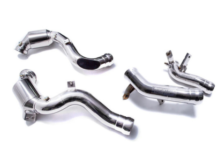


If you’ve ever driven a performance car and felt like something was holding it back—just slightly—you’re not imagining things. Modern vehicles are engineered for a balance of performance, emissions, and comfort. But for enthusiasts, that balance can feel a bit… conservative. That’s where aftermarket upgrades come in, and few are as impactful as downpipes.
Let’s take a closer, more grounded look at what downpipes do and why options like mercedes e63 w213 catted and catless downpipes and lamborghini urus downpipes have become such a hot topic among performance lovers.
What Exactly Are Downpipes?
In simple terms, a downpipe is part of your car’s exhaust system. It connects the turbocharger to the rest of the exhaust. Sounds basic, right? But this component plays a huge role in how efficiently exhaust gases exit the engine.
Factory downpipes are often restrictive because they include dense catalytic converters designed to meet strict emissions standards. While that’s great for the environment, it can limit airflow—and in turn, performance.
Aftermarket downpipes are built to reduce that restriction. The result? Better exhaust flow, quicker turbo spool, and noticeable gains in horsepower and torque.
Catted vs. Catless: What’s the Difference?
This is where things get interesting—and a bit personal depending on your goals.
Catted downpipes still include a catalytic converter, but it’s usually a high-flow version. That means you get improved performance without completely sacrificing emissions control. It’s a middle ground that many daily drivers prefer.
Catless downpipes, on the other hand, remove the catalytic converter entirely. This allows for maximum airflow and performance gains, but it comes with trade-offs—louder exhaust, stronger smell, and potential legal concerns depending on your region.
There’s no one-size-fits-all answer here. Some drivers want subtle gains and compliance, while others chase raw, unrestricted performance.
Why E63 W213 Owners Are Upgrading
The Mercedes-AMG E63 W213 is already a beast straight from the factory. With its twin-turbo V8, it delivers serious power. But like many turbocharged engines, it benefits massively from improved exhaust flow.
Upgrading to mercedes e63 w213 catted and catless downpipes can unlock hidden performance. Drivers often report faster throttle response and a more aggressive exhaust note that finally matches the car’s personality.
There’s also the tuning factor. When paired with a proper ECU tune, downpipes can significantly boost output, making the car feel sharper and more alive. It’s not just about numbers—it’s about how the car responds when you press the pedal.
The Urus: Luxury Meets Raw Power
The Lamborghini Urus is a different kind of machine. It blends supercar DNA with SUV practicality, which is honestly still a bit wild to think about.
Because of its turbocharged V8, the Urus responds exceptionally well to exhaust upgrades. Installing lamborghini urus downpipes enhances both performance and sound. And let’s be real—the sound matters just as much as the speed in a Lamborghini.
Owners often describe the transformation as night and day. The engine breathes easier, the turbo spools quicker, and the exhaust note becomes deeper, louder, and far more engaging.
Performance Gains You Can Actually Feel
It’s easy to get lost in technical specs, but what most drivers care about is feel. Downpipes deliver improvements that are immediately noticeable.
You might feel quicker acceleration when merging onto a highway. Or a sharper response when overtaking. Even the sound—more raw, more mechanical—adds to the driving experience in a way that’s hard to quantify.
That said, it’s important to pair downpipes with proper tuning. Without it, you won’t fully unlock their potential, and in some cases, you might trigger warning lights.
Things to Consider Before Upgrading
Before jumping in, there are a few practical points worth thinking about.
First, check local regulations. Catless setups, in particular, may not be street-legal in certain areas. Second, consider your usage. If it’s a daily driver, a catted option might be more comfortable long-term.
Also, quality matters. Poorly made downpipes can cause fitment issues or even damage other components. It’s always worth investing in a reputable brand.
Final Thoughts
Upgrading downpipes isn’t just about chasing horsepower—it’s about refining the driving experience. Whether you’re pushing an AMG sedan to its limits or unleashing the full character of a luxury SUV, the right setup can completely change how your car feels.
At the end of the day, it comes down to what you want from your vehicle. More power, better sound, sharper response—or maybe all three. And with the right downpipe upgrade, that’s exactly what you get.