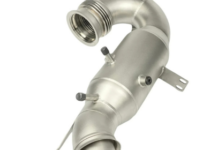

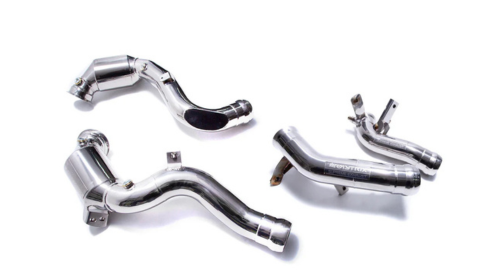
For performance car enthusiasts, the road to more power, quicker response, and throatier sound often begins beneath the car – with the exhaust system. Among the most impactful upgrades you can consider is the installation of aftermarket downpipes. Whether you’re behind the wheel of a Mercedes-AMG E63 W213 or the monstrous Lamborghini Urus, upgrading your downpipes—either catted or catless—can deliver dramatic improvements in both performance and experience. Let’s break down what these downpipes do, the difference between catted and catless, and what to expect from each vehicle.
What Are Downpipes, and Why Do They Matter?
Downpipes connect your vehicle’s turbocharger to the rest of the exhaust system. They play a crucial role in managing exhaust gases that exit the turbo. Stock downpipes are often restrictive due to emissions requirements, using smaller diameters and catalytic converters designed to meet regulatory standards rather than optimize performance.
Aftermarket downpipes increase exhaust flow, reduce backpressure, and unleash horsepower that your engine was already capable of producing but was being held back.
Mercedes E63 W213: The V8 Beast with Tunable Potential
The W213 E63 is an absolute powerhouse out of the box, boasting a 4.0L V8 biturbo engine that’s become a fan-favorite among tuners. But to truly awaken its potential, you’ll want to start by replacing the restrictive factory downpipes.
Many E63 owners go for high-performance mercedes e63 w213 catted and catless downpipes to take advantage of faster turbo spool times, more aggressive exhaust note, and substantial power gains.
- Catted downpipes retain high-flow catalytic converters, which help reduce emissions while still providing improved performance and better airflow.
- Catless downpipes, on the other hand, remove the catalytic converters entirely. This allows for maximum exhaust flow, significantly improving turbo efficiency and sound—but at the cost of increased emissions and potential CEL (check engine light) issues unless tuned properly.
With a tune, these downpipes can increase horsepower by 50+ HP depending on supporting mods, making them one of the best dollar-per-horsepower investments for E63 W213 owners.
Lamborghini Urus Downpipes: Unlocking the Raging Bull’s Roar
The Lamborghini Urus combines supercar DNA with SUV functionality. Underneath its bold exterior lies a 4.0L twin-turbo V8 that responds exceptionally well to exhaust upgrades.
The factory exhaust is relatively tame for a Lamborghini, but installing performance lamborghini urus downpipes transforms the experience. The sound becomes deeper, more aggressive, and unmistakably exotic.
Similar to the E63, you’ll have to choose between:
- Catted downpipes, which balance emissions compliance and performance
- Catless downpipes, which deliver maximum power and sound, albeit with potential legal and inspection challenges in some regions
The Urus, when paired with downpipes and a proper ECU tune, can easily break the 700 HP mark, making it one of the fastest luxury SUVs on the planet. The upgrade also reduces turbo lag and improves throttle response, which is especially noticeable in a heavier vehicle like the Urus.
Things to Keep in Mind Before Upgrading
- Tuning is often required after installing catless downpipes to avoid check engine lights and to make full use of the performance gains.
- Emissions regulations vary by country and state. In places with strict laws, catted downpipes are the safer bet.
- Warranty concerns may arise when modifying your exhaust system. It’s important to know what your dealership or manufacturer considers acceptable.
Final Thoughts
Downpipes may not be the most glamorous car mod to discuss, but their impact is undeniable. Whether you drive a W213 Mercedes E63 or a Lamborghini Urus, upgrading to high-flow or catless downpipes can transform your car’s sound, turbo response, and horsepower output. It’s a performance upgrade you’ll feel every time you touch the accelerator—and hear every time you rev the engine.